Your equity, alongside everything else.
Grants at more than one employer, a 409A that moves, an RSU that settles net of withholding, an exercise window. What is vested, what is exercised, and what is owned, with the next vest dated.
Grants at more than one employer, a 409A that moves, an RSU that settles net of withholding, an exercise window. What is vested, what is exercised, and what is owned, with the next vest dated.
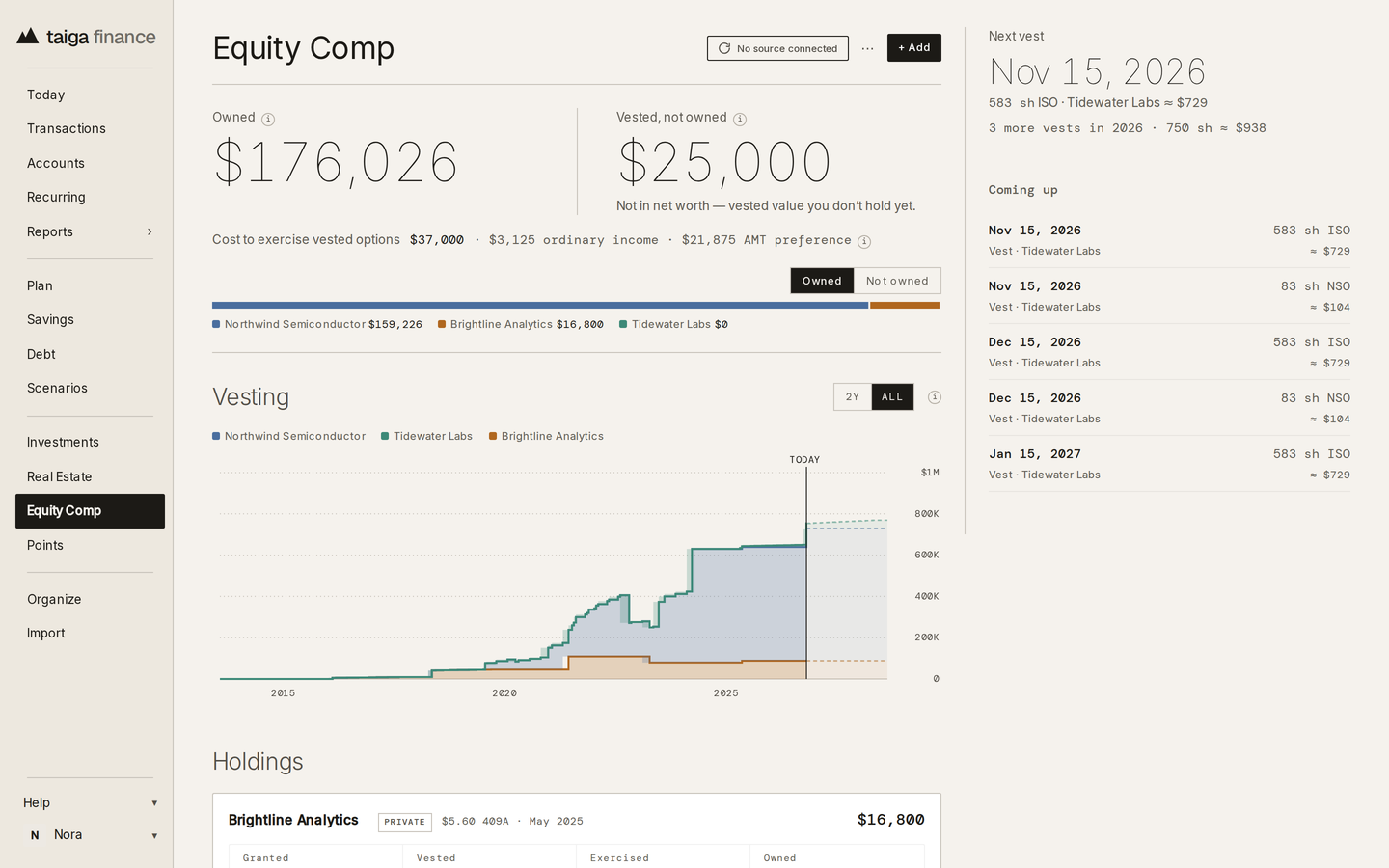
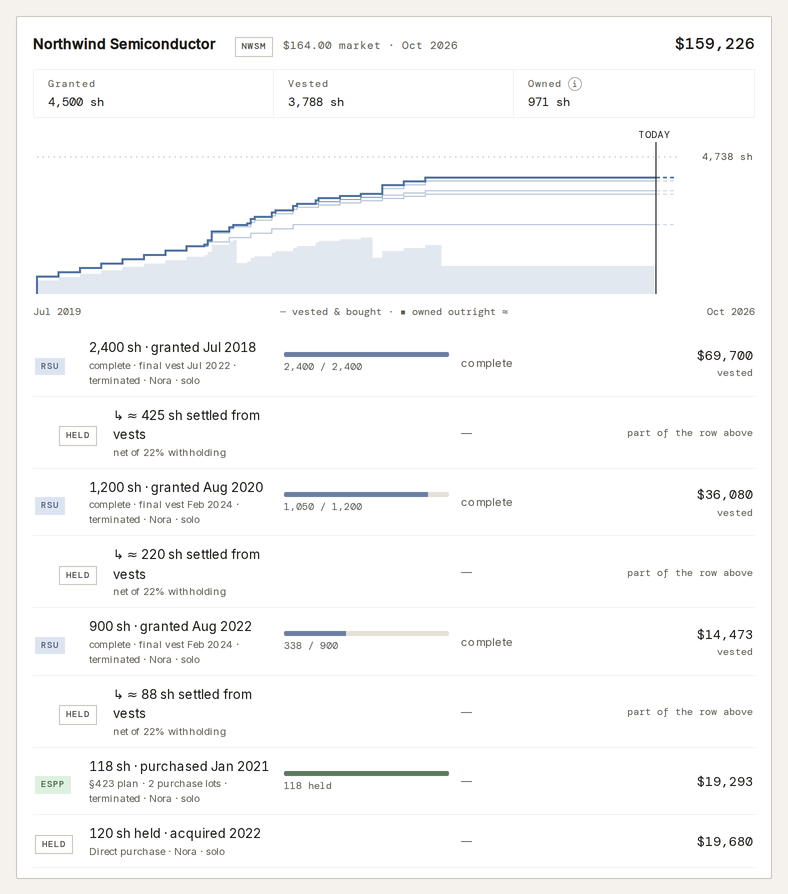
ISOs, NSOs, RSUs and ESPP at more than one employer, with the schedule and the vested and exercised shares behind any one grant. An RSU states how it settles, and the shares kept net of withholding are an estimate, marked ≈. A schedule the presets don't fit is entered vest by vest.
A private company is valued at its 409A history, a public one at the share price entered for it, and every grant at the company re-prices when a new entry lands. Taiga Finance fetches no market price.
Importing from Carta →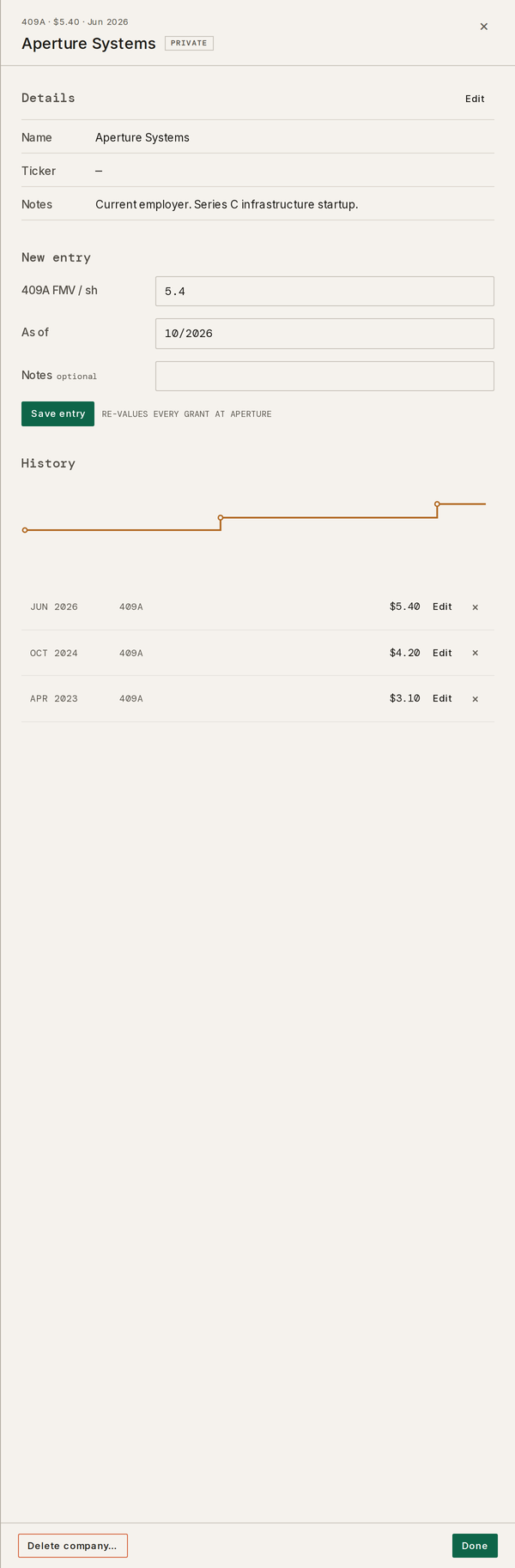
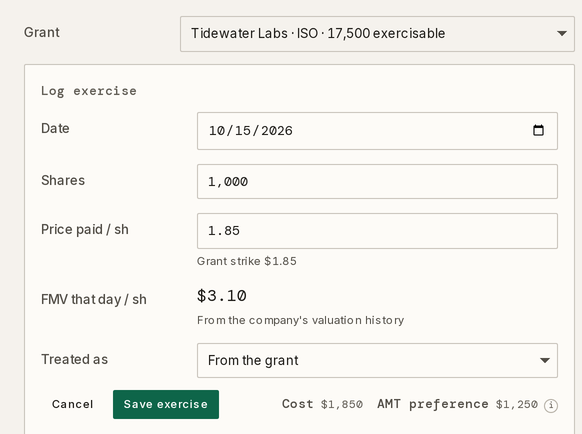
An exercise logs against a vested option grant, and its cost and spread show before it saves. An ISO's spread is labeled an AMT preference only while the grant is proven inside the $100,000 yearly limit.
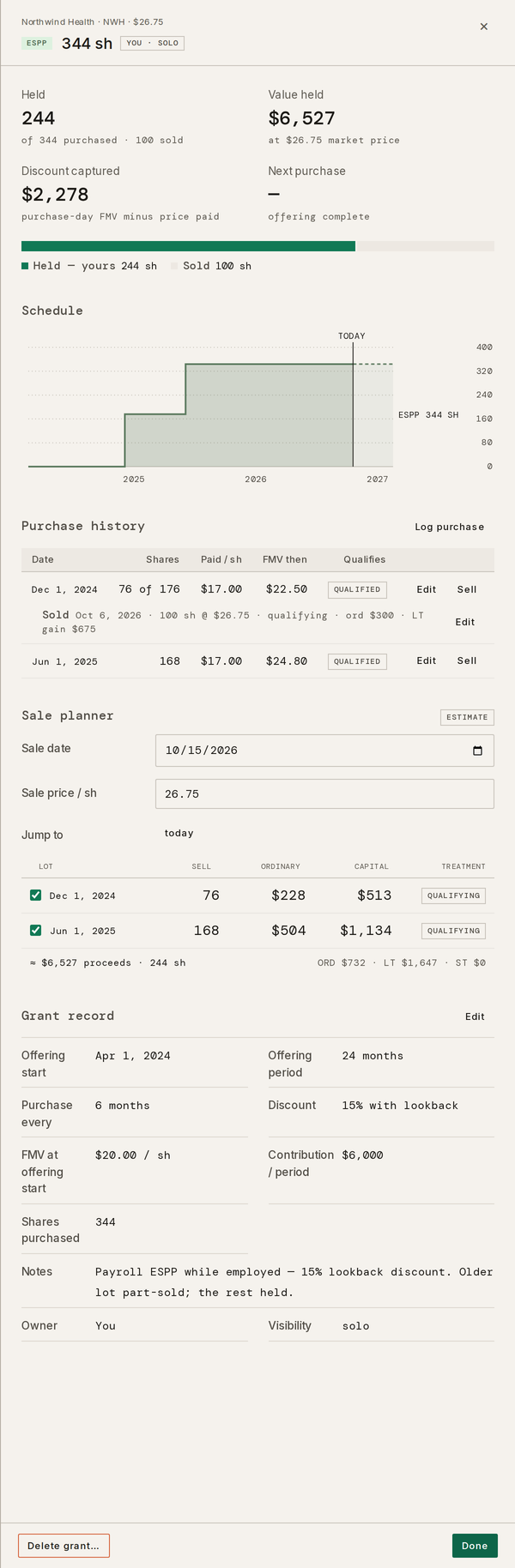
ESPP lots carry their purchase dates, and a sale planner estimates a sale on any date as ordinary income and capital gain, qualifying or not. How a sale would be treated shows before it happens, labeled as an estimate.
A grant can be included in Investments: its owned shares then sit in their own Equity Comp group and count in net worth, at the share of value chosen for it. Unexercised options never do. Once included, a concentrated position reads as a share of everything else.
Investments on the Accounts & balances page →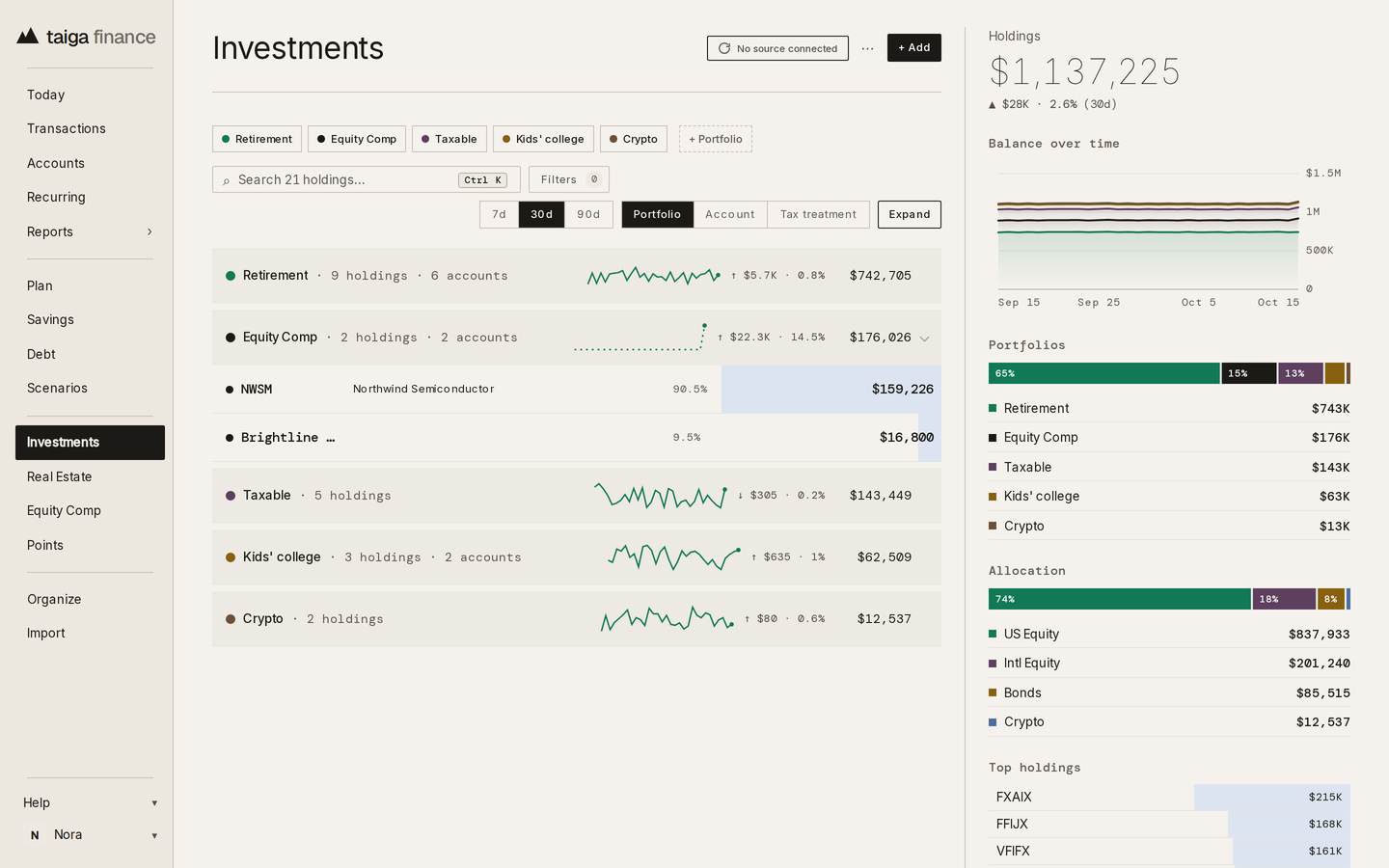
No. It shows what is exercisable today, the strike to exercise it and the spread at the current FMV, and it logs what was exercised and sold. The decision stays yours.
Yes. A company keeps its own grants, valuation history and price line, current employer or former, and all of them roll into one owned figure and one vested-not-owned figure.
A price entered by hand. A public company takes a market price entered by hand; a private company's price is its 409A history, entered by hand or from a Carta file.
Yes. Carta's Exercises export, as CSV: the exercises are matched to your grants at review, and each row's FMV lands in that company's 409A history. With AI on, a screenshot, PDF or pasted copy of the Carta Options table is read too.