What your startup equity is worth, and what exercising would cost.
Your grants live in a portal and a spreadsheet you only half trust. Taiga Finance keeps ISOs, NSOs, RSUs and ESPP next to your bank accounts, grant by grant.
Your grants live in a portal and a spreadsheet you only half trust. Taiga Finance keeps ISOs, NSOs, RSUs and ESPP next to your bank accounts, grant by grant.
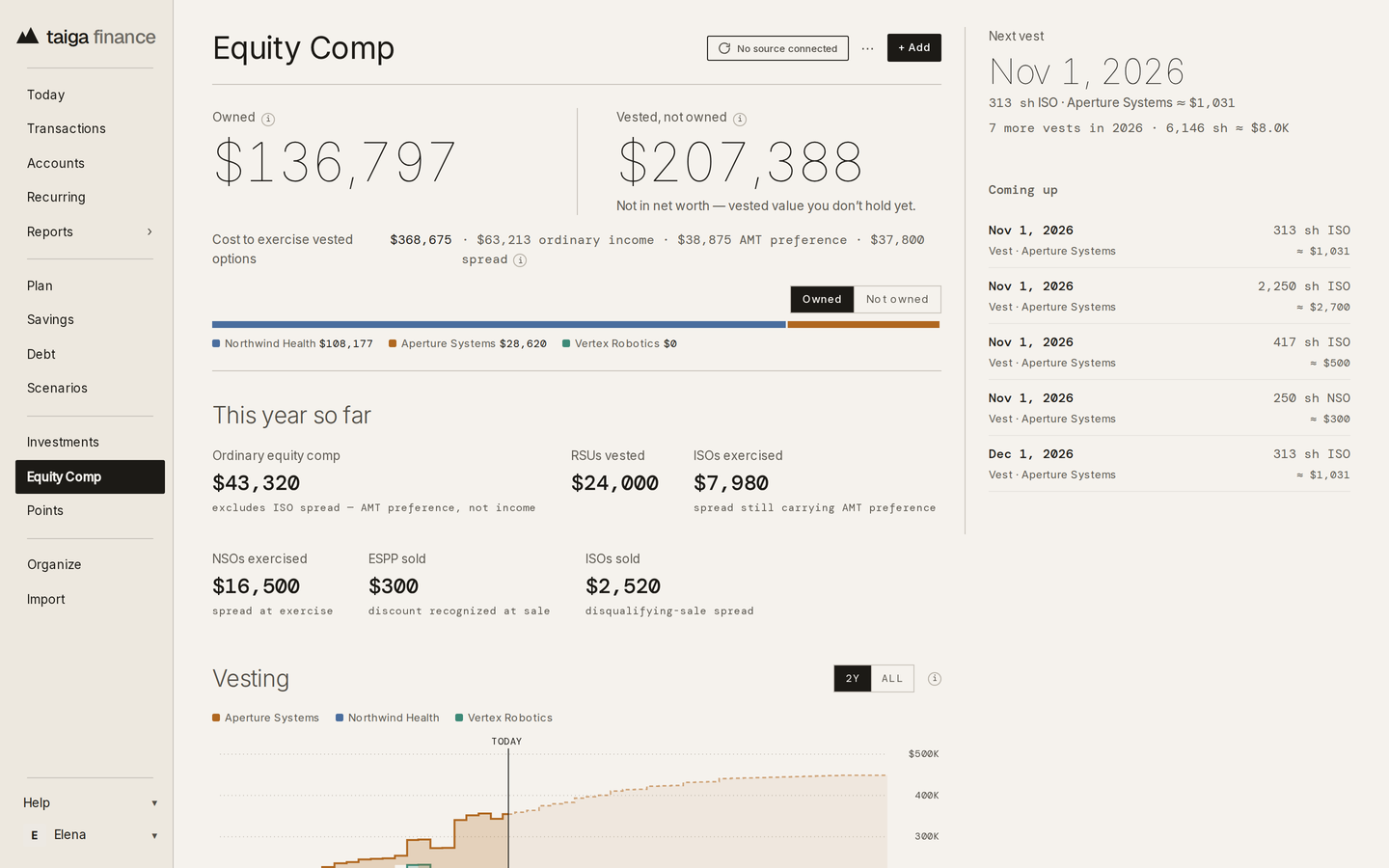
Taiga Finance draws what has vested and what is still ahead on one chart, across all your companies. Grants from a former employer stay on it beside the current one's.
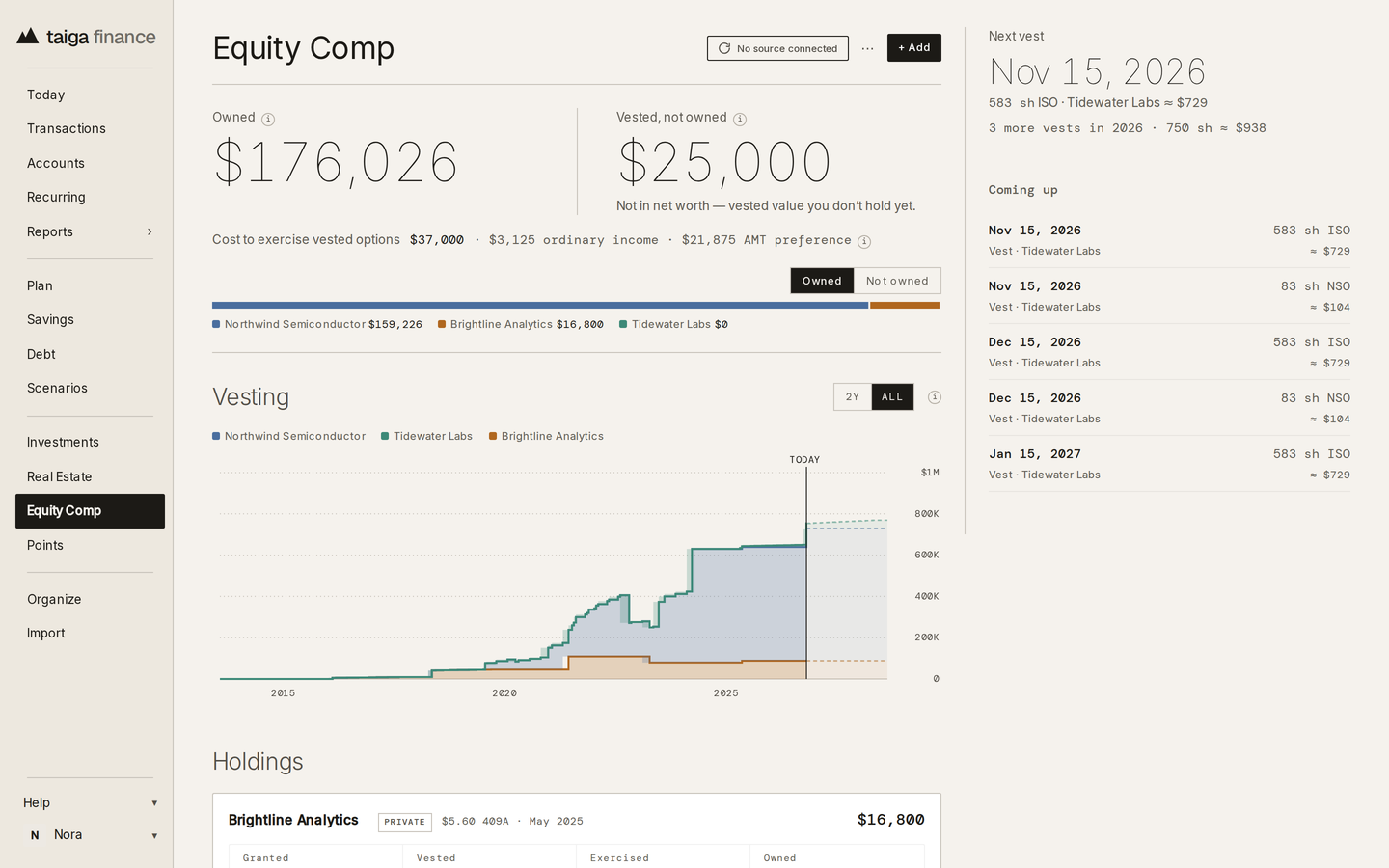
Private shares have no ticker, so Taiga Finance values them at the company's 409A history, typed in or brought in from Carta. A new valuation re-prices that company's grants. A public company uses its market price.
What a 409A valuation is →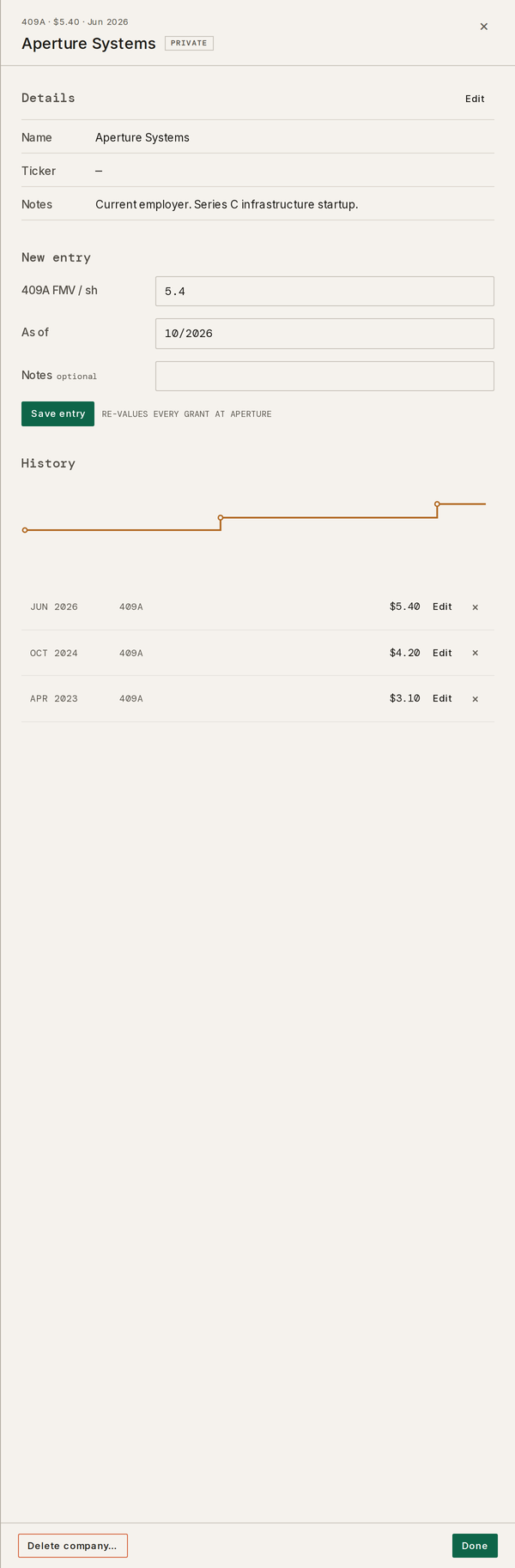
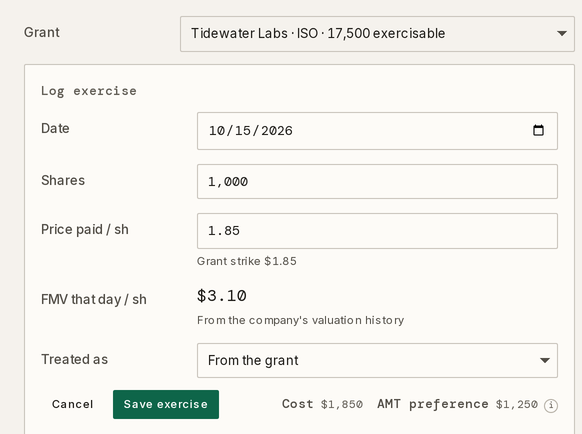
For any vested grant, Taiga Finance shows the strike cost and the spread at the current fair market value, before anything is saved. A saved exercise goes on the record from the day it happened.
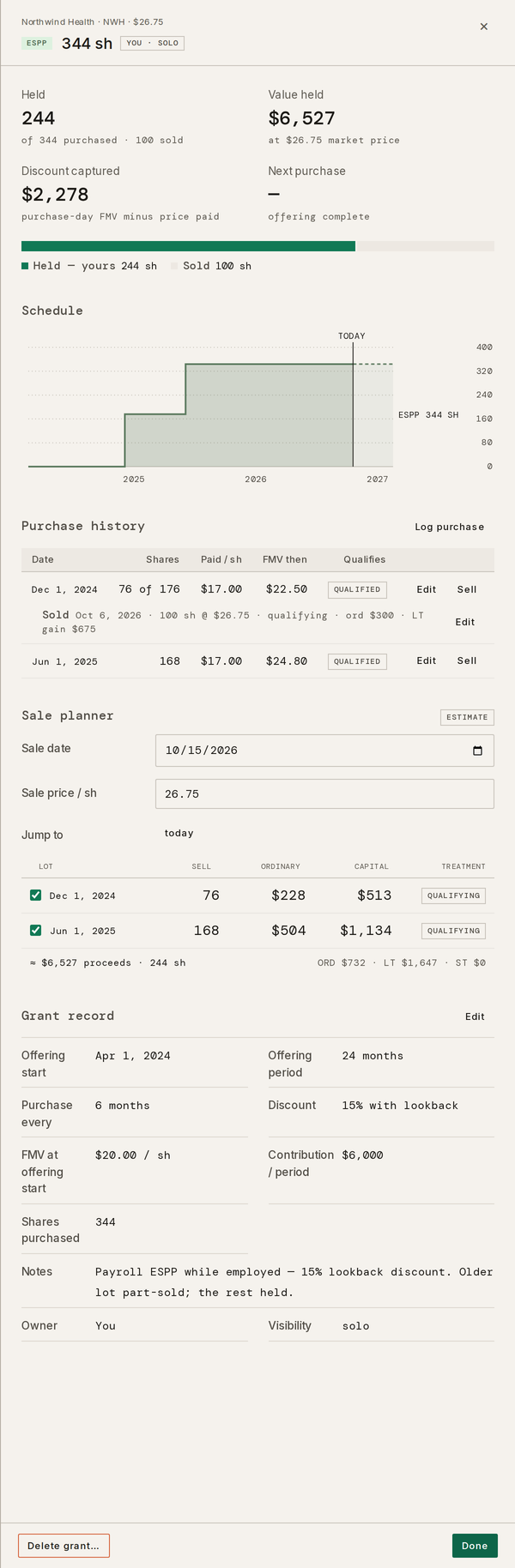
For a sale on any date, Taiga Finance's sale planner splits it into ordinary income and capital gain. It marks whether a lot has been held long enough to be qualifying.
Shares you own sit in Investments and in net worth, beside the brokerage and the house. Options you haven't exercised stay out of the total.
Equity compensation, feature by feature →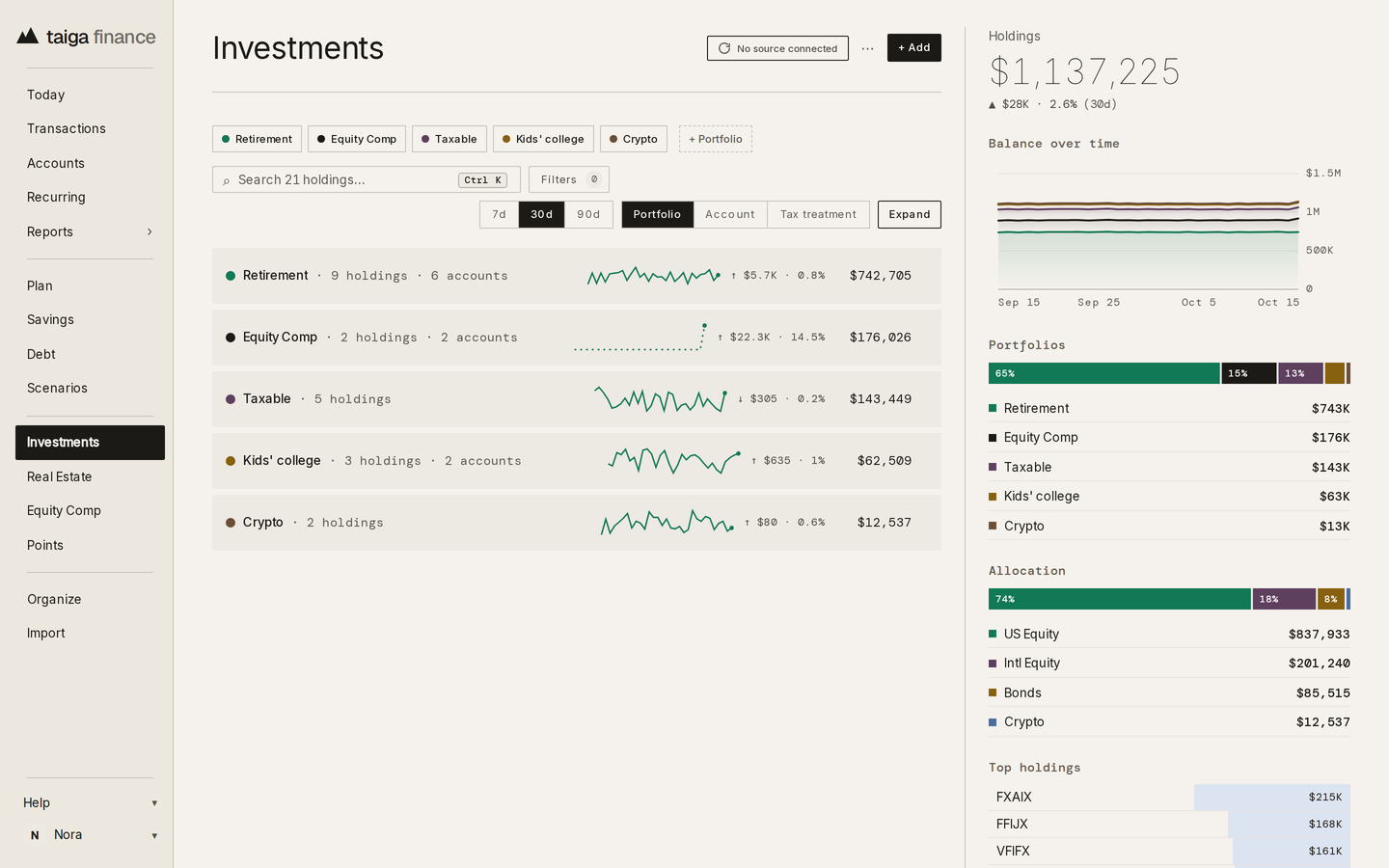
Yes. Taiga Finance tracks ISOs, NSOs, RSUs and ESPP grant by grant, at any number of employers, in the same app as the bank accounts, the monthly plan and net worth.
Taiga Finance values them at the company's 409A. Private shares have no market feed, so the price is the latest valuation on record, typed in or read from a Carta file.
Yes. When you log an exercise, Taiga Finance shows the strike cost and the spread at the current fair market value before anything is saved. It does not recommend whether or when to exercise.
Yes. Taiga Finance reads Carta's exercises export, a CSV file, and matches the exercises to your grants for you to review. A valuation in the file goes into that company's 409A history.
No. Net worth counts only the shares you own. Unvested grants and vested options you haven't exercised show on the Equity Comp page with their own figures, outside the total.
$12 a month or $90 a year, after 14 free days. There is one plan, and equity compensation is part of it.